
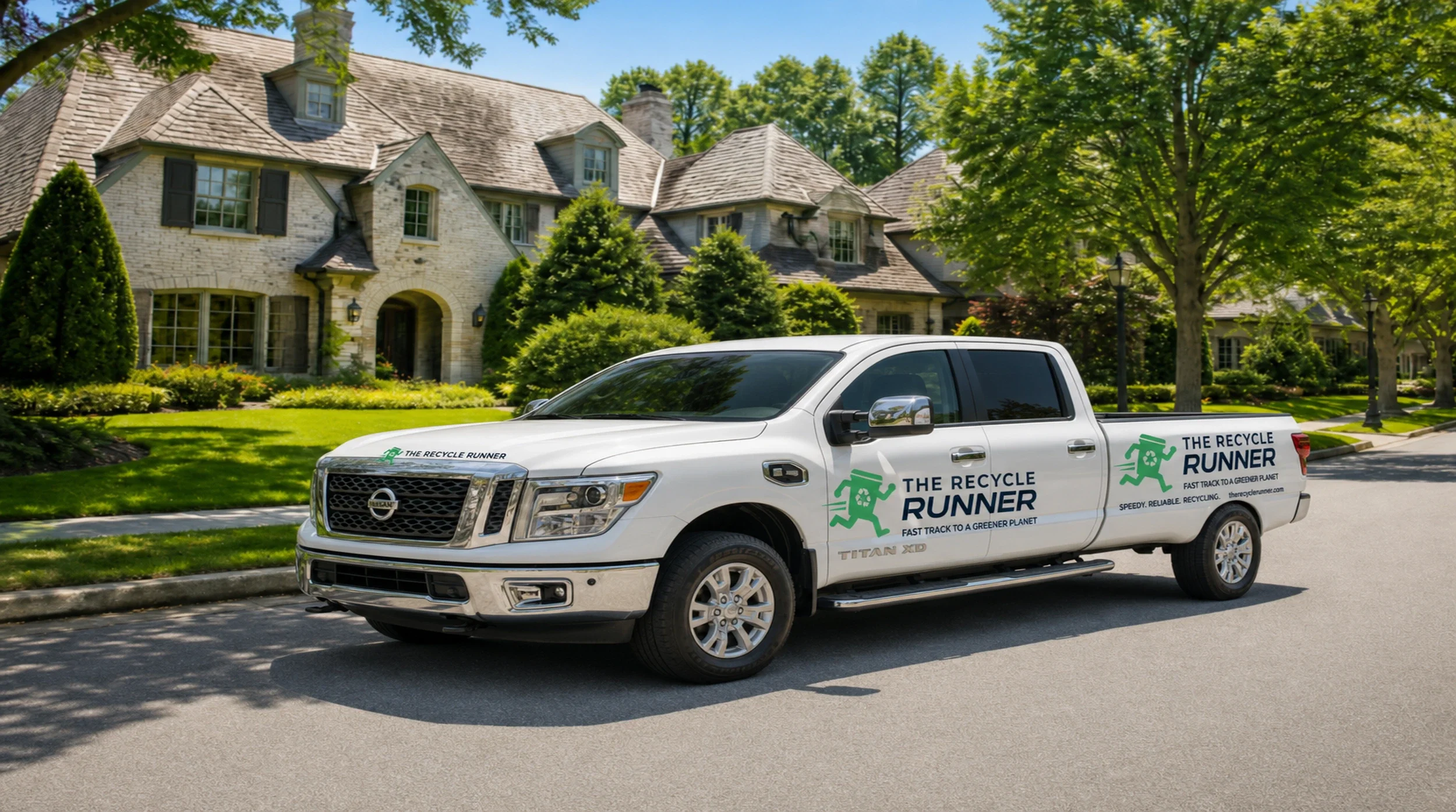
Premium Valet Recycling Service
CLEAN Recycling Starts AT THE Curb
Help us keep our community sustainable. By ensuring only acceptable items enter your rolling bin, you help us eliminate contamination and maximize our environmental impact.
What We Accept
Know What Goes In The Bin
Simple guidelines to make your recycling as effective as possible.
Yes, please
-
What to include: Shipping boxes, shoe boxes, moving boxes.
How to Identify: Look for corrugated layers (the wavy middle layer) and a dry, non-greasy surface.
Quick Prep: Must be flattened to save space in your bin.
-
What to include: Newspapers, inserts, office paper, glossy magazines, mail.
How to Identify: Look for standard printed paper. If it tears easily and isn’t coated in plastic wax, it’s good to go.
Quick Prep: Keep dry; remove plastic wrap or rubber bands.
-
What to include: Soda cans, soup cans, metal food containers.
How to Identify: Look for rigid metal packaging. (If it’s a flexible foil pouch, it’s a “No”).
Quick Prep: Give them a quick rinse; labels can stay on.
-
What to include: Water bottles, soda bottles, milk jugs, detergent jugs.
How to Identify: Look for the recycling triangle on the bottom with a 1 or 2 inside.
Quick Prep: Give them a quick rinse and discard the plastic caps.
No, thank you
-
How to Identify: Anything stretchy or crinkly, like grocery bags, bubble wrap, or plastic wrappers.
The Why: These easily tangle in sorting machinery and cause system shutdowns.
-
How to Identify: Leftover food, wet food residue, or oily grease-stained cardboard (like the bottom of a pizza box).
The Why: Food oils ruin clean cardboard and paper, turning a whole batch into trash.
-
How to Identify: Takeout containers, packing peanuts, foam cups, or foam coolers. Look for the #6 recycling symbol (which we do not accept).
The Why: Foam breaks apart into microscopic pieces that contaminate clean materials.
-
How to Identify: Wine or beer bottles, pickle jars, or broken glass.
The Why: Glass breaks easily during transport in our trailers and poses a safety risk to our drivers.
-
How to Identify: Grass clippings, leaves, twigs, soil, garden weeds, branches, or dirt.
The Why: These belong in a compost pile, not a recycling processing center.
-
How to Identify: Old cords, phones, holiday lights, or household batteries.
The Why: These require specialized e-waste handling and can cause server truck or trailer fires if crushed.
Premium Feature
Keeping It Clean: The “Oops Tag”
To ensure we maintain a high standard of environmental impact, our drivers perform a swift visual check of your premium rolling bin before emptying it. If we spot any banned or unrinsed materials, we will leave the item behind and attach a polite, helpful “Oops Tag” to your handle. This tag gently notes what can’t be accepted so we can work together to keep our next loop perfectly clean! No fines, no stress – just a friendly reminder to help keep our neighborhoods truly green.
Ready to experience hassle-free, premium valet recycling?
View Plans & Sign Up